

Why Ecosystems Matter: Reflections from the Zinc Summer Gathering
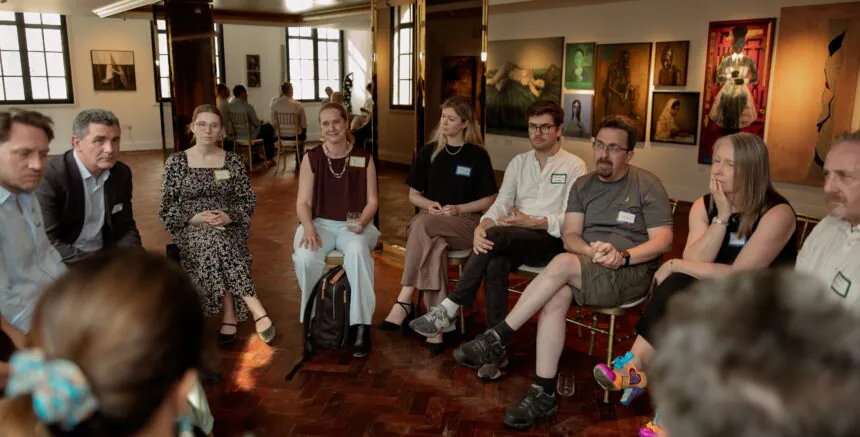
Last week, we opened the doors of Town Hall in King’s Cross for the Zinc Summer Gathering 2026 – a celebration of the brilliant founders, funders, chairs, partners and supporters who make up the Zinc Science-for-Impact ecosystem, and a chance to step back and take stock of what we’ve built together.
We believe that the world’s most important problems can be solved through Science-for-Impact – but only if the systems around science are deliberately convened, again and again, to turn discovery into real-world outcomes. That’s what our annual Summer Gathering is: a catalyst for the relationships that will determine what the ecosystem builds next.
A buzzing ecosystem in the room
The afternoon opened with a Zinc Founder Mixer running alongside a Chair & NED Mixer and Roundtable, before the whole community came together for the Zinc Science Fair and an evening of pitches, debate, discussion and networking. At the heart of the afternoon was our Founder Thesis Series, where ten founders each shared a bold vision for how pioneering science could reshape the future.
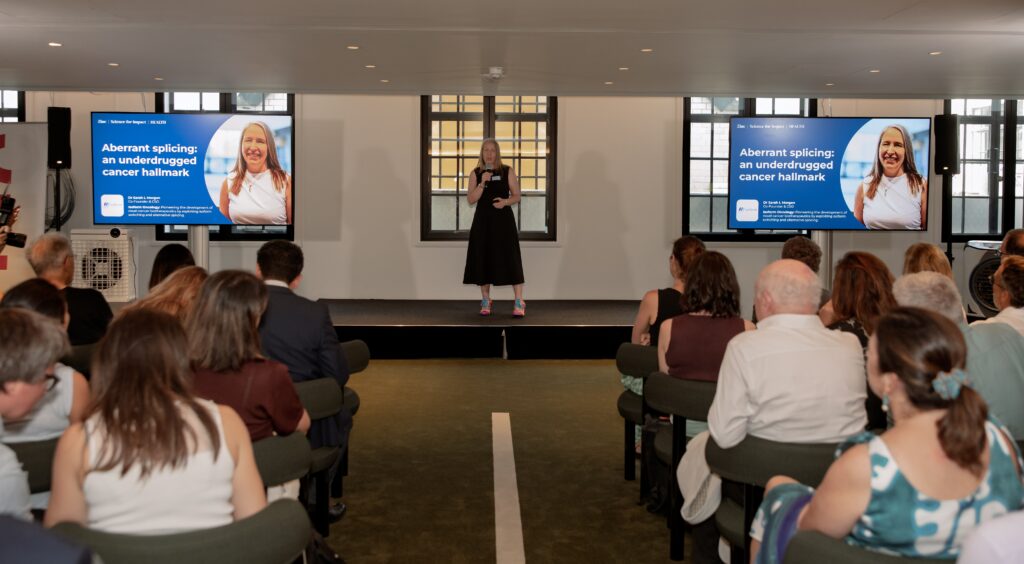
From our health portfolio, we heard ambitious ideas tackling some of society’s toughest challenges. Dr Ahmet Berkyurek (CamMed Therapeutics) explored how new mRNA technologies could unlock treatments for diseases that today remain beyond reach. Dr Sarah Morgan (Isoform Oncology) challenged conventional approaches to cancer by targeting aberrant splicing, while Dr Olivia Collier (Speek) described a future where no young person waits for life-saving mental health care. Nick Sireau (Serenatis Bio) argued that compulsivity could become one of neuroscience’s next great frontiers, and Dr Davide Danovi (Migration Biotherapeutics) showed how rethinking the treatment of brain cancer could dramatically improve outcomes.
Our environment founders demonstrated how deep science is creating practical solutions to global problems. Jamie Hutchinson (Cordon Technologies) explored how precision agriculture can reduce pesticide use while improving productivity. Camilla Penrice (Potenix) showed how engineered biology and AI can transform food waste into clean energy. Sebastiaan Schalkwijk (SolarSub) highlighted innovations in floating solar infrastructure, Simon Rathbone (Cellmine) tackled the growing challenge of critical mineral recycling, and Marc Ottolini (Infiniflux) looked beyond software to the physical infrastructure needed to power the AI revolution sustainably.
Across health and environment, the throughline was the same one we return to again and again: science only becomes impact when it’s built and funded by people determined to close the gap between a novel idea and the populations who need it.
The conversations that matter
Great ecosystems are built through connection and conversation as much as innovation. Throughout the afternoon, founders, investors, operators and experts came together to wrestle with the questions shaping the future of science entrepreneurship.
The Founder Sharing Circles surfaced common challenges familiar to every scaling company: building exceptional teams, keeping a grip on process and governance as teams scale, and navigating regulatory pathways for drugs and devices with the right advisors in the room. Again and again, founders returned to the importance of culture, thoughtful leadership and the value of learning from one another.
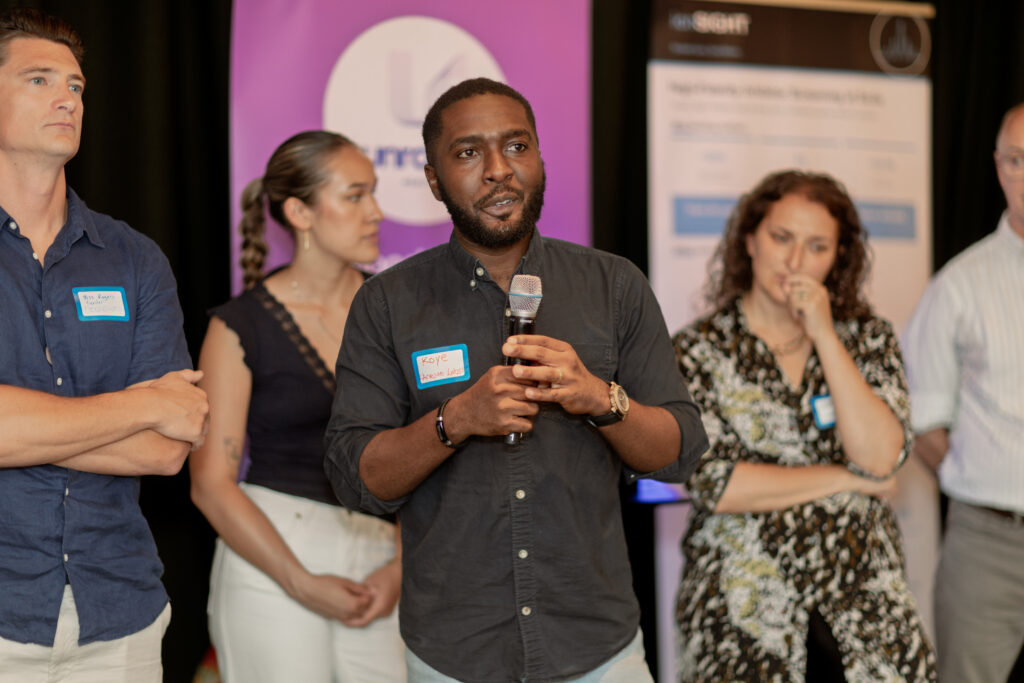
Our Interdisciplinary Discussion Pods tackled bigger questions facing the entire innovation ecosystem. Conversation highlights included:
Is capital concentration antithetical to venture? This pod dug into whether fewer, larger checks are a helpful filter or an artificial one. Deeptech milestones cost more to reach, expectations have risen, and fewer companies clear the bar – but the room was split on whether that’s survival of the fittest or simply a mismatch between founders and the investors right for their stage. The clearest point of agreement: nobody can reliably call the “winners” this early, and VC capital may not be moving fast enough to keep pace with innovation.
Will circularity replace extraction? This group landed firmly on yes, with the real question being what to prioritise recycling, since not every material or process makes economic sense yet. Circularity, the group noted, is inseparable from questions of sovereignty: who controls the value chain within a given region.
Are there non-VC routes to impact at scale? Here the discussion pod explored the space beyond the standard venture playbook – foundations taking more risk from their endowments, small fast grants to de-risk early experiments, and founders diversifying how a venture-scale idea gets funded, including opening parts of it up to philanthropy.
Will AI create more companies than it destroys? This group put the question to a vote, and the room landed on “both”: a larger total pool of companies, but a harder, more competitive path to scale. As barriers to incorporation and team-building fall away, the group expects smaller, more capable companies to become the norm – with research-intensive fields, where AI compresses years of testing into a fraction of the time, best placed to benefit first.
Building better boards
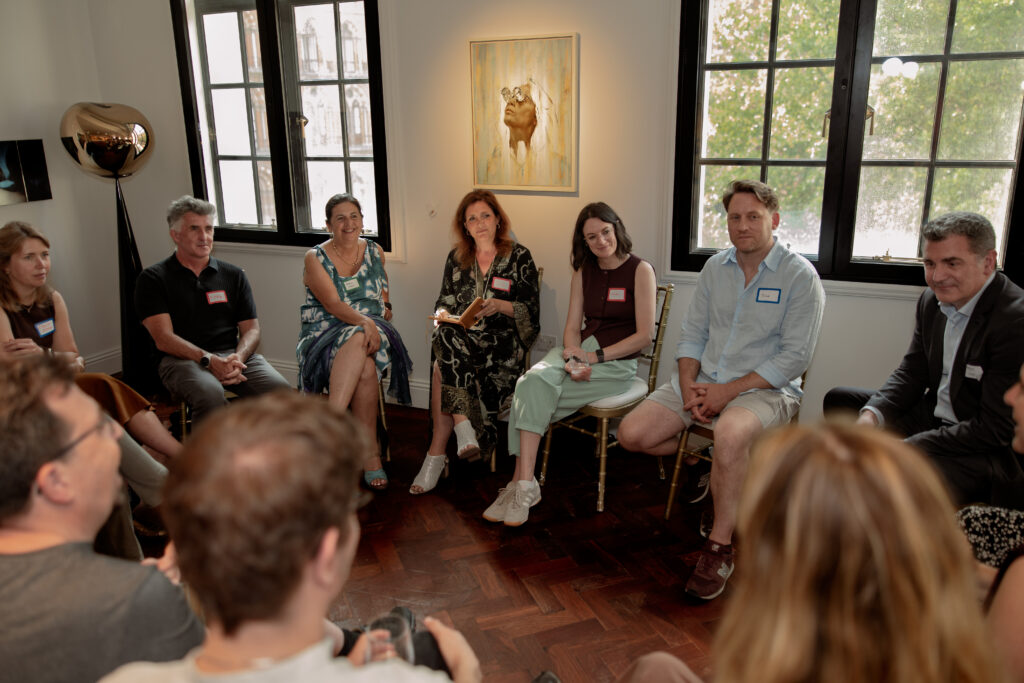
Our Chair & NED Roundtable tackled a question every early-stage company eventually has to answer: what makes an exceptional Chair? We were delighted to hear from Grace Hamza of Nurole, who challenged the room to start with the company’s needs rather than a job title, to recruit for the journey ahead rather than today’s problem, and to look beyond the usual networks for board talent. The conversation left us with real momentum, and a shared commitment to keep building a community of Chairs and NEDs working with early-stage impact ventures.
The Zinc Debate
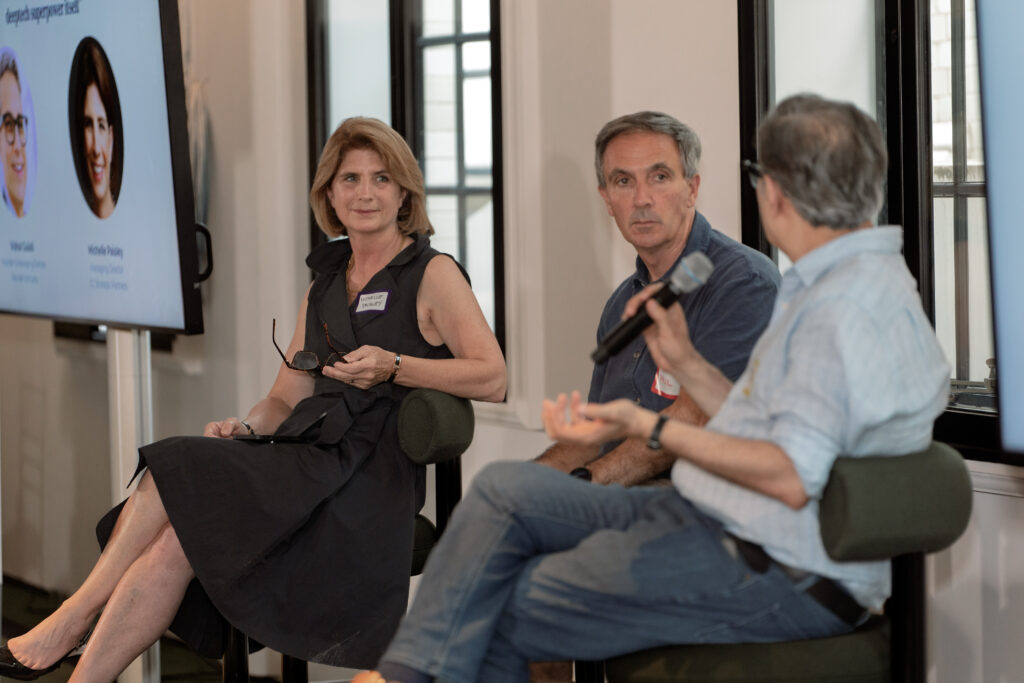
The evening closed with the Zinc Debate, hosted by Paul Kirby, Zinc Co-Founder & Managing Partner. Vishal Gulati of Recode Ventures and Michelle Paisley of CC Strategic Partners went head to head on the motion that the UK has more to learn from China than the US if it’s to become a deeptech superpower. The debate emphasised China’s domination of environmental technologies and the extraordinary growth in health innovation in the last decade. Key Chinese themes that came through were: strong government leadership in technology investment; highly competitive markets driving innovation; regional clusters with the full stack in R&D from invention through engineering to manufacturing; and the speed at which innovations can be trialled.
However, it was argued that China lacks the openness of the USA in terms of wanting, attracting or backing international talent in science, engineering, commercial management and entrepreneurship. Therefore, the UK should double-down on its openness and attractiveness as the place for the best international talent to come, build, stay and scale their science and technology. When it came to voting, the audience was divided on which of the two deeptech superpowers has the most lessons for the UK, as there is much to learn from both, and, as a result, something unique to build here in the UK.
The ecosystem is our greatest advantage
One of the strongest messages from the day wasn’t delivered from the stage. It emerged between sessions. Around discussion tables. Over coffee. During introductions between founders and investors. In conversations between experienced operators and first-time entrepreneurs: Breakthrough science rarely succeeds in isolation. Every founder benefits from someone who opens a door, asks the difficult question, makes an introduction, shares hard-earned experience or believes in an idea before anyone else does.
Science-for-Impact isn’t about individual ventures alone. It is about creating the conditions where ambitious founders, outstanding science and committed partners reinforce one another, accelerating progress far beyond what any one organisation could achieve. This is what Zinc exists to create.
A big thank you
None of this happens without an ecosystem willing to show up for it. Thank you to every founder who pitched, every Chair and NED who gave their time, every investor and supporter in the room, and everyone who has backed the Zinc portfolio in ways large and small. The relationships built and renewed last week are exactly the kind of connective tissue that turns scientific promise into real-world impact.
If you’re a founder, funder, operator, policymaker or partner who believes the world’s hardest problems deserve science-backed solutions, we’d love you to join us in the room next time. Get in touch – we’re always looking for new collaborators to join us in building Science-for-Impact together.
Join the Zinc community
Stay up to date with all Zinc updates and future posts as part of our fast growing community.
Featured Resources
Zinc Impact Report 2025
Science has the power to change the world – but only if the systems around it evolve. Zinc’s 2025 Science-for-Impact Report showcases a new model for how science, talent and capital can work together to tackle the most urgent challenges in health and the environment.
Across 38 pioneering Science-for-Impact ventures, a series of ecosystem-shaping partnerships and programmes, and a growing global community of talented innovators, the report demonstrates how frontier research is being transformed into scalable solutions for people and planet.
Through Zinc’s three pillars – Investment, Innovation Partnerships, and Inflection – Zinc is building the connective tissue of a new Science-for-Impact system. Explore the ventures, meet the founders, and see how you can join us in unlocking the extraordinary individuals who will unlock the future.
Zinc Impact Report 2024
Zinc’s mission is to make the UK the best place to successfully start a venture which can have a massive impact on the health of people and the planet.
Increasingly, we are building deeper science ventures that serve global, industrial customers in environment and health, giving access to impact at a global scale.
Our 2024 Impact Report explores the challenges that need to be tackled to empower and enable talented founders from around the world to solve critical health and environmental challenges at scale, from here in the UK.
This report showcases success stories from the Zinc portfolio, and highlights how Zinc – and our growing community of hundreds of Founders, Fellows, Coaches, Partners and Funders – are working together to build a world-leading “Science-for-Impact” ecosystem for inception stage ventures in health and environment.